
Abkhaz De Facto Authorities Engage Foreign Representatives During Sokhumi Forum
Meeting with Somali participants highlights ongoing efforts to expand external contacts despite limited recognition
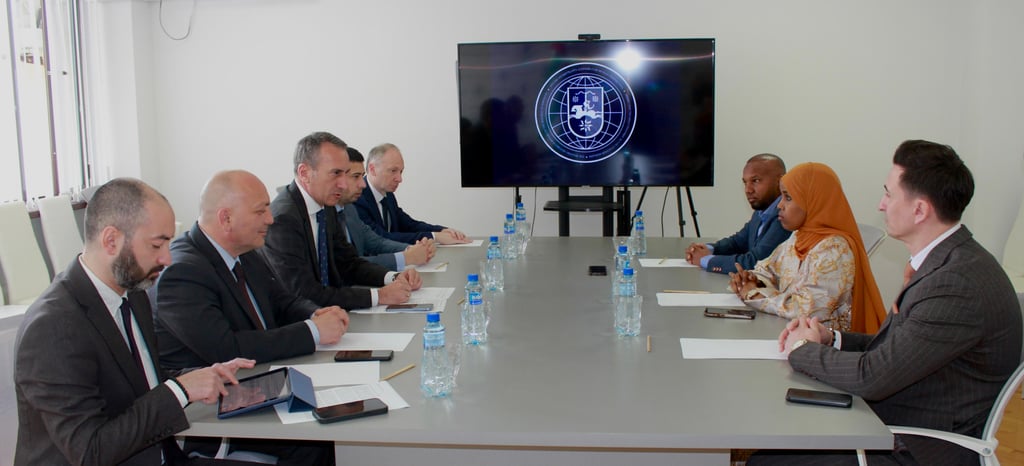
During a ფორუმი [porumi] (forum) held in Sokhumi on April 3–4, de facto officials from occupied Abkhazia met with what was described as a “Somali delegation,” according to information released by the region’s so-called foreign ministry. The meeting took place within the framework of an economic gathering intended to attract international interest.
The Abkhaz side included Oleg Bartsits, identified as the region’s de facto foreign minister, alongside de facto economy minister Teimuraz Mikvabiya and de facto culture minister Daur Kove. The visiting group reportedly consisted of individuals described as “trusted representatives” of Somalia’s foreign ministry, including Adan Muna Abdi and Ismail Hassan Nuur, according to official reporting.
Although Somalia does not officially recognize Abkhazia as an independent state, statements made during the meeting suggested interest in possible future დიპლომატიური [diplomatiuri] (diplomatic) engagement. Adan Muna Abdi was quoted as saying, “We will work to ensure that diplomatic relations are established between our countries. Thank you very much for welcoming us.”
In response, Abkhaz representatives emphasized their willingness to deepen contacts. Apsnypress cited officials, including Bartsits, telling the delegation, “We are glad that you were able to find the time to attend the international economic forum being held in Abkhazia these days. We thank you for your interest in the Republic of Abkhazia, and we hope that this first step will be further developed.”
During the discussions, Abkhaz representatives highlighted internal development efforts, pointing to a სამხედრო [samkhedro] (military) structure described as combat-ready, as well as ongoing cooperation with Russia in sectors such as education and healthcare. These remarks were presented as part of a broader narrative about institutional capacity within the region.
Additional emphasis was placed on economic პოტენციალი [potentsiali] (potential), particularly in transportation and logistics. Bartsits stated that the region has “significant potential in transportation and logistics, which is why the national ports are being actively developed.” He further noted that the reopening of the airport in Sokhumi “allows us to look to the future with optimism and confidence.”
Officials also reiterated their openness to external engagement, describing a policy aimed at developing ურთიერთობები [urtiertobebi] (relations) with countries willing to participate in what they termed constructive dialogue. This framing reflects ongoing attempts to expand international visibility despite geopolitical constraints.
The broader აღიარება [aghiareba] (recognition) landscape remains limited. Only five countries—Russia, Nicaragua, Venezuela, Nauru, and Syria—recognize Abkhazia and the Tskhinvali region/South Ossetia as independent states, while the vast majority of the international community considers both territories part of Georgia.
Syria, which established diplomatic ties with Abkhazia in 2018, has faced calls from Georgian authorities and international actors to withdraw its recognition following political changes in 2024. These dynamics underscore the ვითარება [vitareba] (situation) surrounding efforts by Abkhaz authorities to expand external partnerships.
For requests or suggestions: pr@georgianinstitute.com
Courses Grammar Vocabulary
Culture
Podcasts About Us
Learn the official language of Georgia in 30 days thanks to the most complete grammar, vocabulary and culture course available. Start speaking Georgian today!
© Copyright 2026 Georgian Institute
Come visit Georgia!